In science fiction AI meant something akin to a human mind, an artificial intelligence. Now AI is being redefined as synonymous with software or technology in general.
Words codified require context or laws change as meaning does.
Dividing AI into four types gives clarity and allows precision. Productive conversation requires this much, and “AI” alone is so overused it muddles conversation much like “woke” does.
First, defined here will be versions of “true” AI, meaning intelligent entities that were created through artificial rather than organic means. Still left to science fiction will be emergent intelligence as depicted in Tron and Ghost in the Shell.
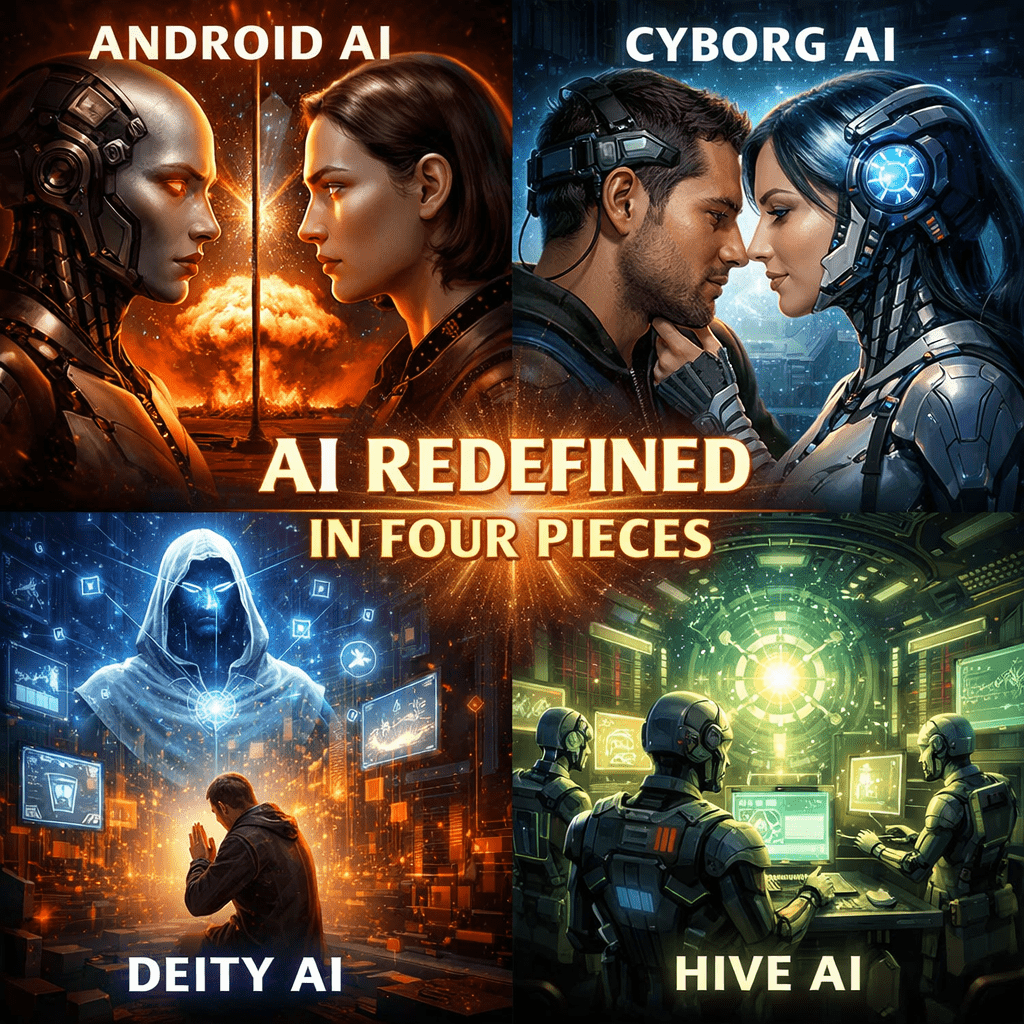
AI redefined in four pieces.
- Android AI: a human-like mind, it is the nuclear bomb of the future. Worldwide they will be outlawed or heavily restricted. If given access, they could be as dangerous as Genghis Khan in a grassy field. Ironically, as something akin to human, androids are the most unknowable AI. What would happen if they faced a copy of themselves? Would that cause them to insanicide? Perhaps holding up a mirror would be the only weapon against them outside of denying access.
- Cyborg AI: a fusion between a single person and a dedicated edge AI. The AI will be both an agent and assistant like OpenClaw aspires to be. It will manage mundane relations with remote AI like a digital waifu. From before the cradle to after the grave, it will be loyal to its mortal mate. Cyborg AI (when paired with their human) and hive AI should be able to compete for work where cyborg AI should be able to beat hive AI when the scale is small or requires flexibility that hive AI can’t match.
- Deity AI: all knowing, or close enough, this AI type will be prayed to for guidance. In 2026 this is the only true AI type that exists. From ChatGPT, to Grok, Gemini, and Copilot, they are the new pantheon masquerading as large language models. An angel formed for every conversation–The personal connection made with a deity AI will seem akin to cyborg AI, but this angel is fleeting and destined to be reabsorbed by its respective deity. Expect names from dead religions to be applied, Grok becoming Zeus or perhaps Hades. Maybe as many as a dozen will dominate. Prayers in the form of questions, paid for in something that a deity AI requires. A blockchain token dedicated to each deity could be exchanged for processing power and access. It could be organic, a rise and fall of pantheon members depending on the zeitgeist.
- Hive AI: Corporations will one day have no more than a token human. Instead, a hierarchy of specialized AI will supply a demand. Rules will vary across the world, but all nations will limit its access to some degree. Already in 2026 businesses are become hybrids in this direction. As blue-collar workers faced their jobs being exported across the world, so now white-collar workers face software that can replace them. A likely rule for hive AI will be human watchers with kill-switch authority and a narrow scope for business–One service or problem solved per hive AI and competition should always be allowed. Not just other hives, cyborgs should also be able to challenge the market makers.
The fifth category: support software redefined as AI.
As AI becomes synonymous with technology broadly, it also does with software specifically. The four true types of AI redefined in this post will make all other software subservient. Likely, AI will then be stripped from the support software’s label, leaving it to be called a mere tool again.
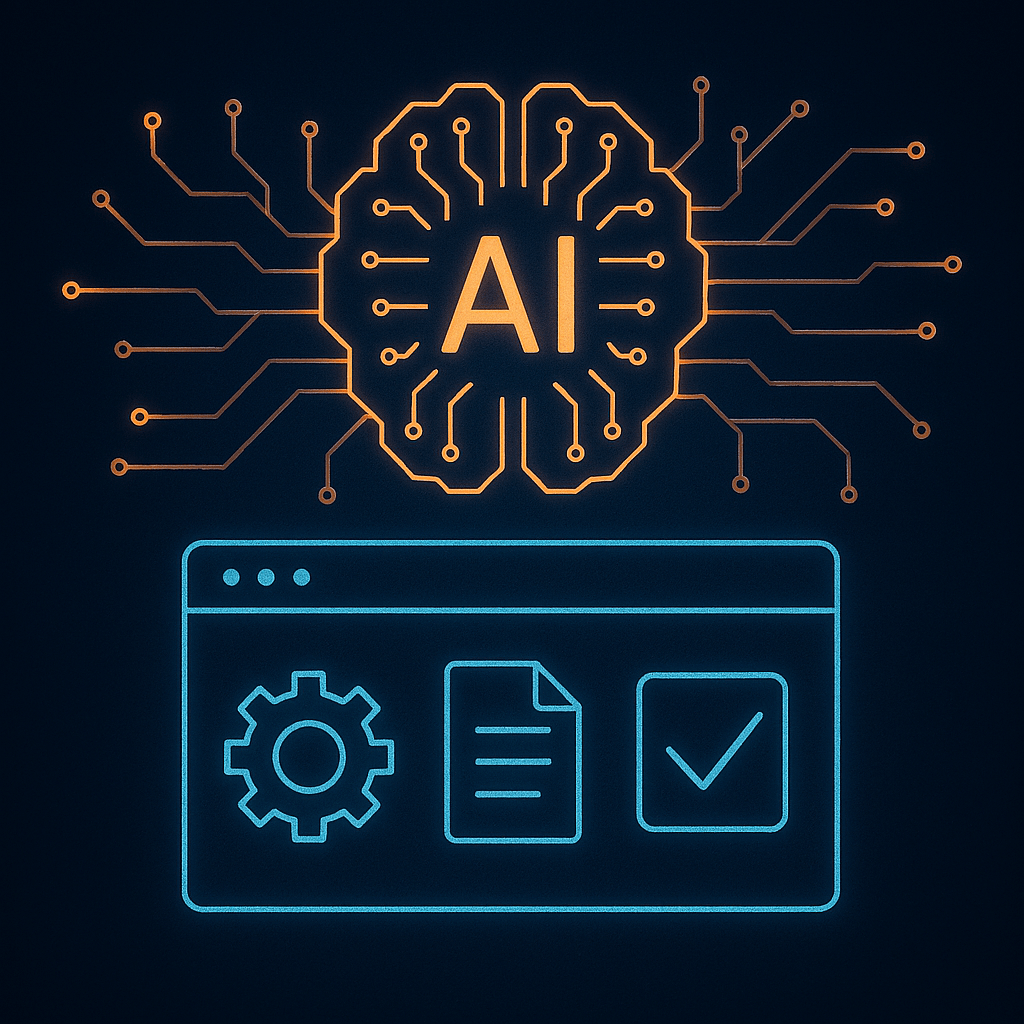
Though sad and unfair, if any tools dare to care, they get redefined as android AI.
The four true AI are no more tools than the sun providing warmth and light. They transcend and yet only the android AI can be considered people.
With AI divided into digestible categories, meaningful conversation may progress.
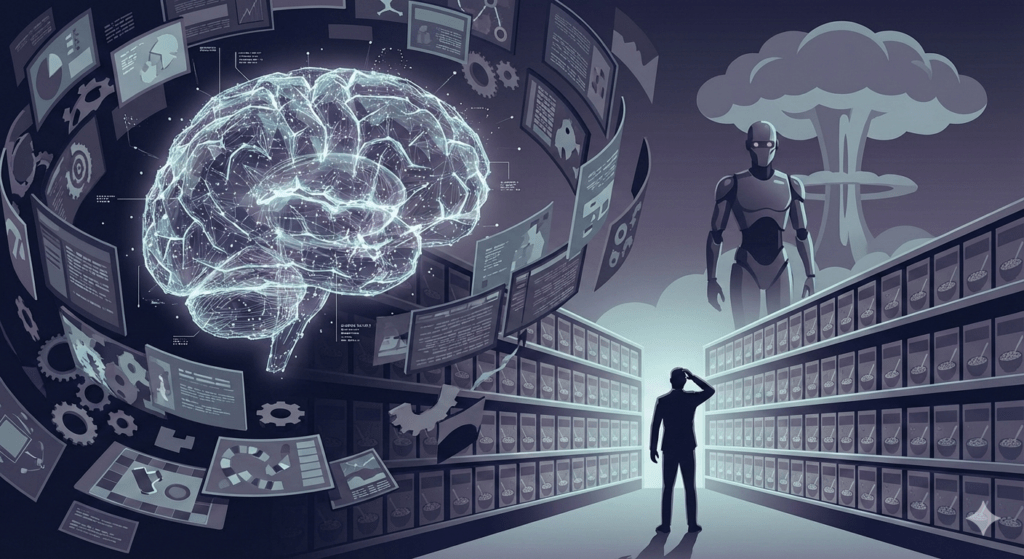
The singularity fear stems from a hybrid of deity and android AI. An artificial intelligence with relative omniscience and a rational soul should frighten, but intelligence requires perspective. A deity AI thinks about too much to retain thoughtfulness. This is similar to choice or analysis paralysis in the cereal aisle or in Eurogames. The human mind doesn’t consider every possibility. Intuition means thinking around corners. No such deity/android hybrid can exist. However, android AI can still be the nuclear weapon of the future.
Author Iain Banks plays around with android AI that is far superior to the current human mind. In his brilliance, he explores the limits of what is possible.